
CONCEPT 01
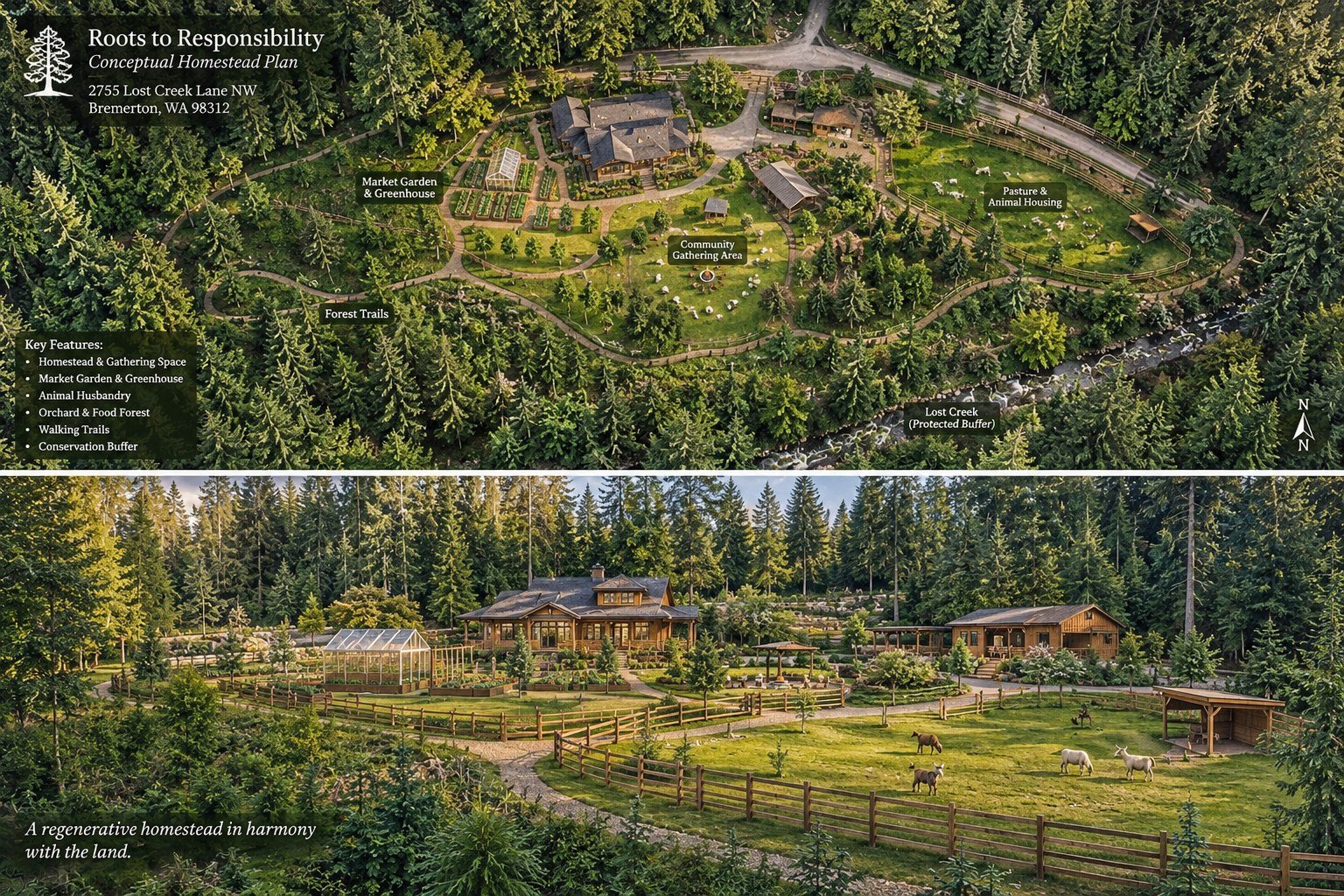
Education-first campus
A practical early-phase layout prioritizing safe access, school groups and garden-based learning.
01Arrival & parking0.35 ac
02Learning pavilion & paths0.45 ac
03Teaching gardens & orchard1.25 ac
04Small animal learning zone0.55 ac
05Open field & future expansion1.10 ac
06Woodland & habitat buffer1.30 ac
Areas are approximate programming allocations, not verified buildable areas. Illustrative north arrow and rectangular geometry are hypothetical.
Land-use allocation
| Zone | Acres | Sq ft |
|---|---|---|
| Arrival & parking | 0.35 | 15,246 |
| Learning pavilion & paths | 0.45 | 19,602 |
| Teaching gardens & orchard | 1.25 | 54,450 |
| Small animal learning zone | 0.55 | 23,958 |
| Open field & future expansion | 1.10 | 47,916 |
| Woodland & habitat buffer | 1.30 | 56,628 |
| Total | 5.00 | 217,800 |
Planning priorities
- Parking and drop-off remain close to the entrance
- Teaching beds and covered learning area form the core
- Small livestock zone stays separated from food growing and children’s arrival